QUEEN ANNE CEILING ROSE
QUEEN ANNE CEILING ROSE
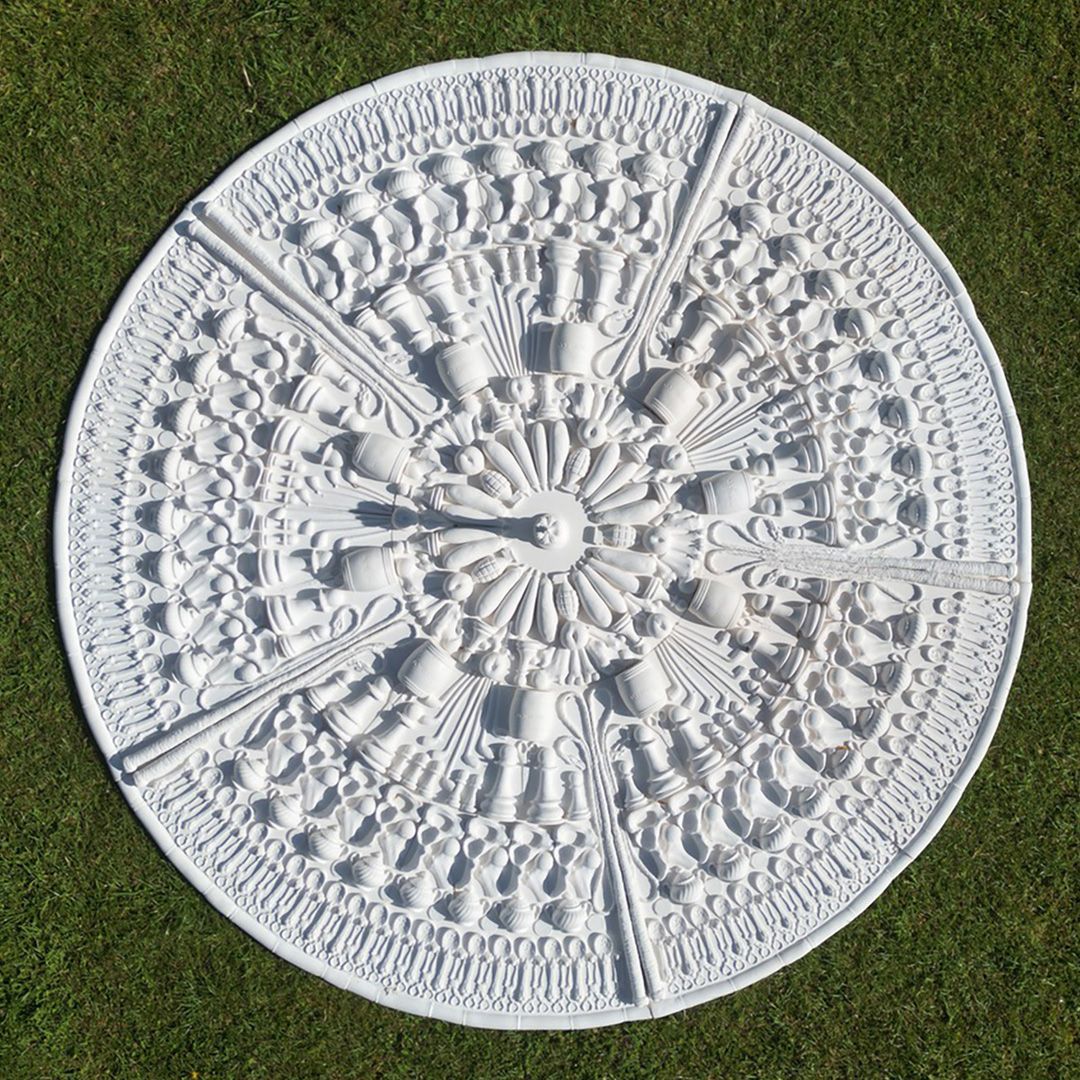
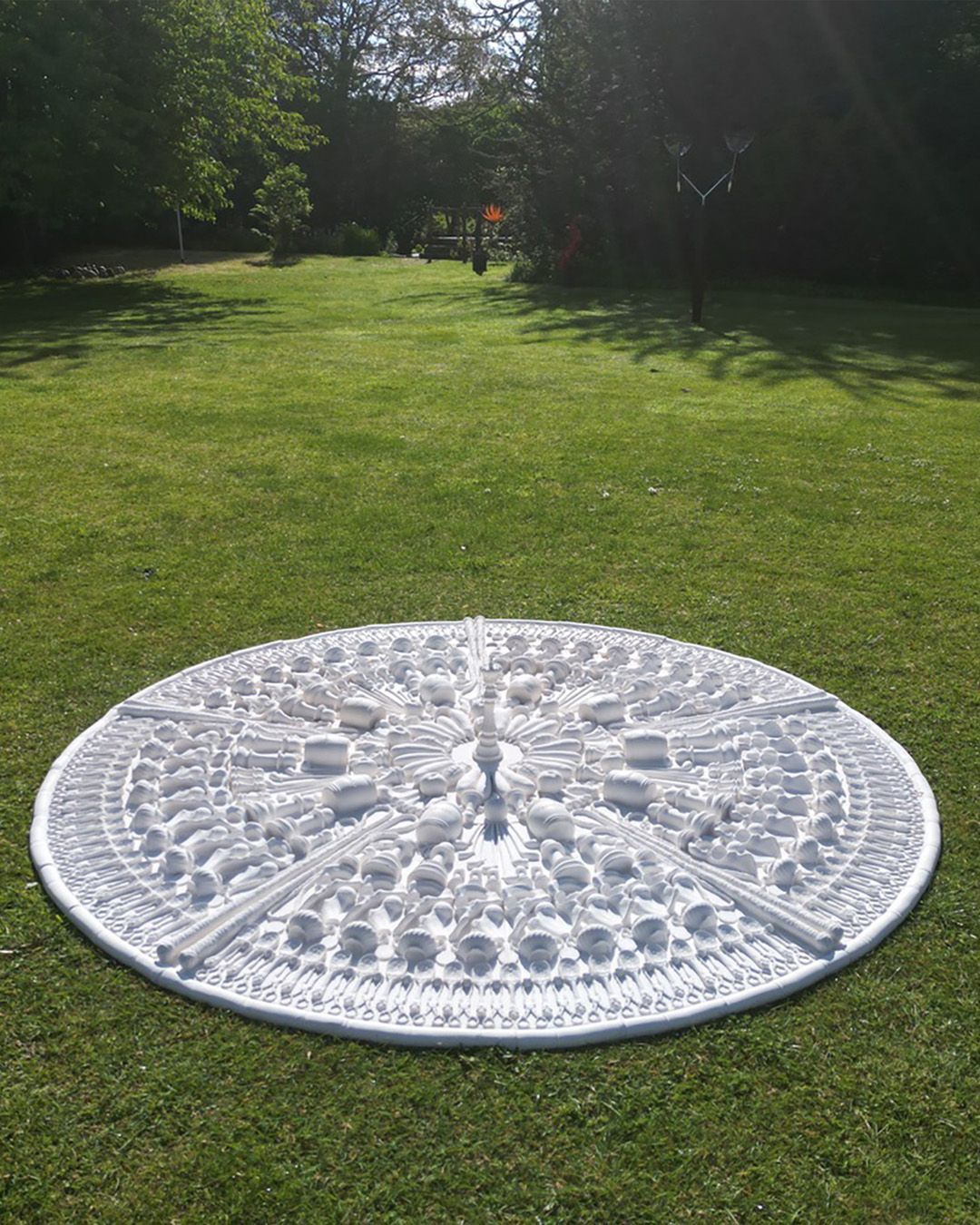
Queen Anne Ceiling Rose. 2.5 meter diameter.. Cassini plaster.
Exhibited at Fresh Air Scupture June 2026.
Image courtesy of Steve Russel Studios
Artist Statement
Above dining tables, hallways and drawing rooms ceiling roses are traditionally associated with ornament. Queen Anne Ceiling Rose manipulates this emotional familiarity to confront the viewer with hidden histories embedded within architecture itself. This recognisable architectural feature is destabilised from something deeply nostalgic into something unsettling and politically charged. Intricate radial patterns seduce the viewer through their beauty and symmetry, before revealing a darker narrative. The work appropriates the aesthetic language of decorative plasterwork whilst embedding within it cast metaphorical and representative objects associated with the transatlantic slave trade.
Research
This work examines the architectural legacy of Britain's involvement in the transatlantic slave trade, considering how histories of wealth, power and violence remain embedded within the built environment. Many buildings in Britain are connected, directly or indirectly, to the profits of slavery. The South Sea Company held the British Asiento contract, granting it the right to supply enslaved Africans to Spanish America. The immense wealth generated through this trade extended into the British monarchy, with Queen Anne allocated shares in the company, and her successor, George I, inheriting and expanding these investments.
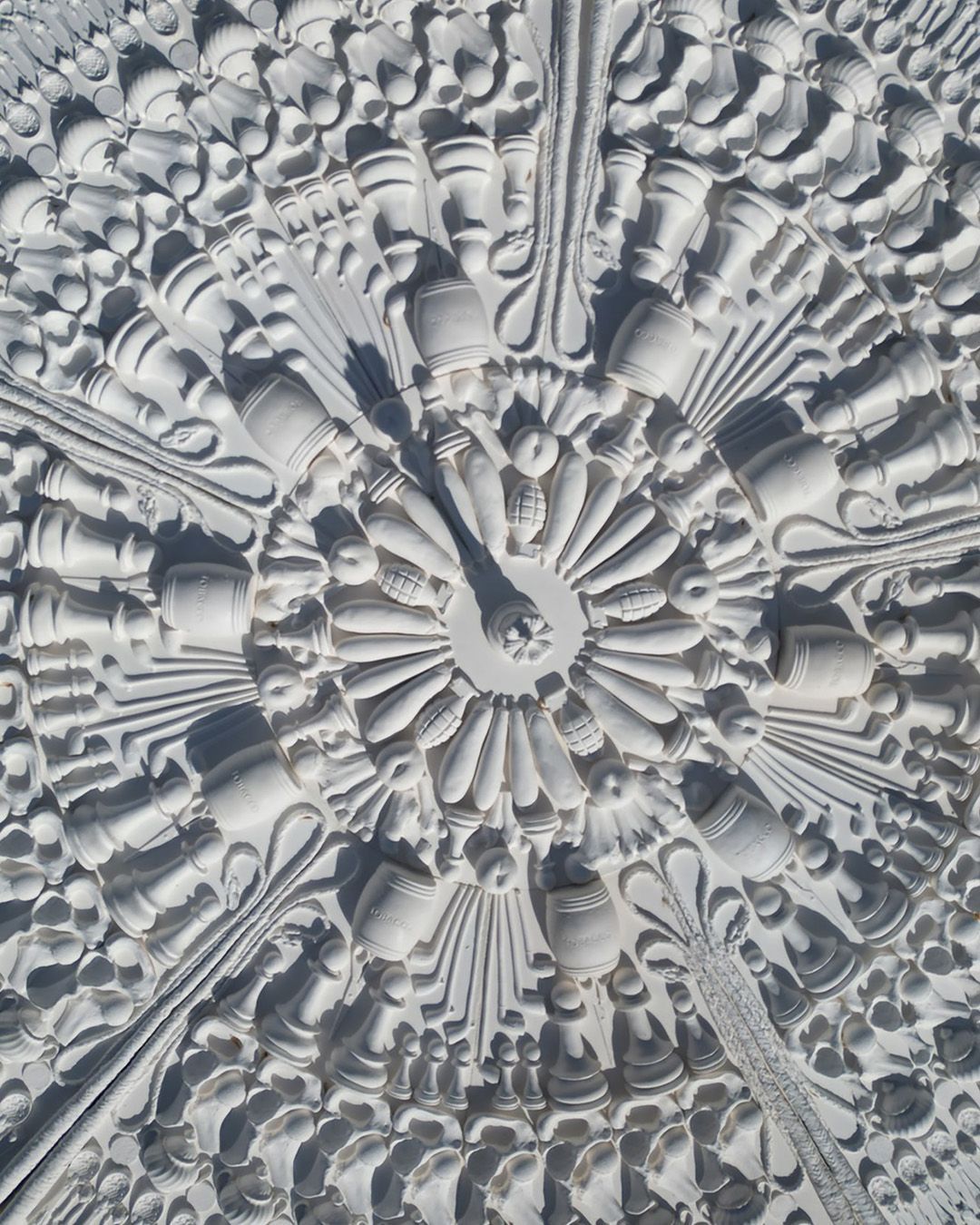
Architectural ornament becomes a site of historical enquiry. Bones, grenades and the contemporary digital shorthand of aubergine and peach emojis allude to the physical and sexual violence inflicted upon enslaved people. During the World Wars, hand grenades were commonly nicknamed pineapples because of their segmented form. The pineapple, meanwhile, had long been a celebrated architectural motif in Georgian and Victorian interiors, where it symbolised wealth, hospitality and imperial prosperity. Here, the slippage between grenade and pineapple collapses the language of ornament and violence, exposing the brutality that underpinned colonial wealth.
Objects associated with the consumption of sugar and tobacco—including sugar bowls, tongs, spoons, tobacco jars, clay pipes and eighteenth-century coins—reference the triangular trade that sustained Britain's colonial economy. Returning ships carried sugar and tobacco cultivated through forced labour on Caribbean plantations, transforming commodities produced through enslavement into symbols of refinement and domestic status.
Chess pawns evoke the denial of agency experienced by enslaved people. Their differing scales, combined with the presence of scissors, refer to the systematic separation of families, a deliberate tactic used to control enslaved populations. The objects are arranged within a repeating fleur-de-lis motif, centred on a queen chess piece that reflects on monarchy, British colonialism and the enduring structures of imperial power.
By reconfiguring these symbolic objects as an architectural ornament, the work reveals the disquieting relationship between decoration and violence. It asks how the material legacy of slavery continues to inhabit the spaces we preserve and celebrate, exposing histories embedded within Britain's architecture while acknowledging the enduring legacy of suffering, displacement and inequality left by the transatlantic slave trade.
Queen Anne Ceiling Rose, Detail. 2026.
Wall mounterd tryptic . 135cm H x 90cm W
Exhibited at Assemlbly, Moving gallery and Abject gallery Sunderalnd, 12th june - 25th July

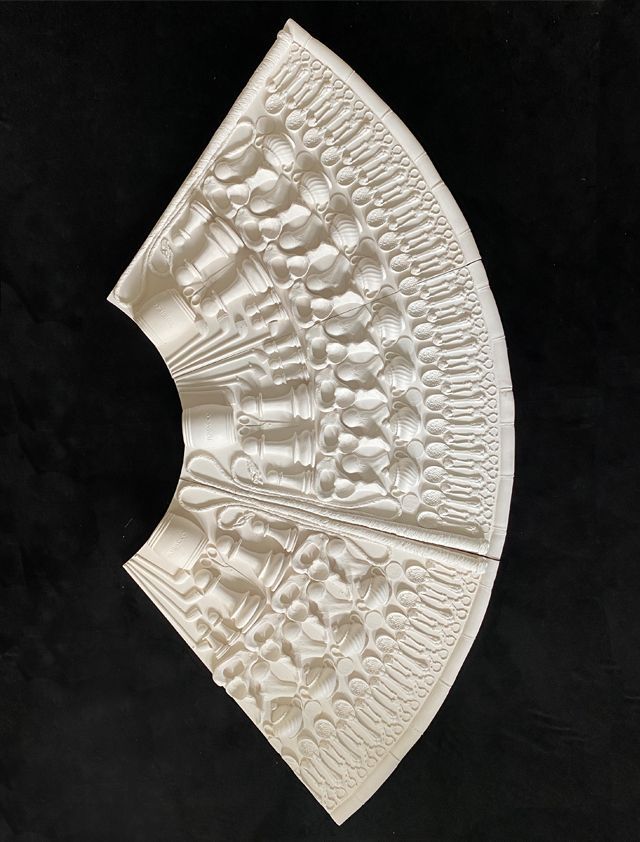
Studio research to see how the objects could fit together. resulted in the development of smaller wall mounted works.
The sugar implements lead to a new work called One Lump or Two?
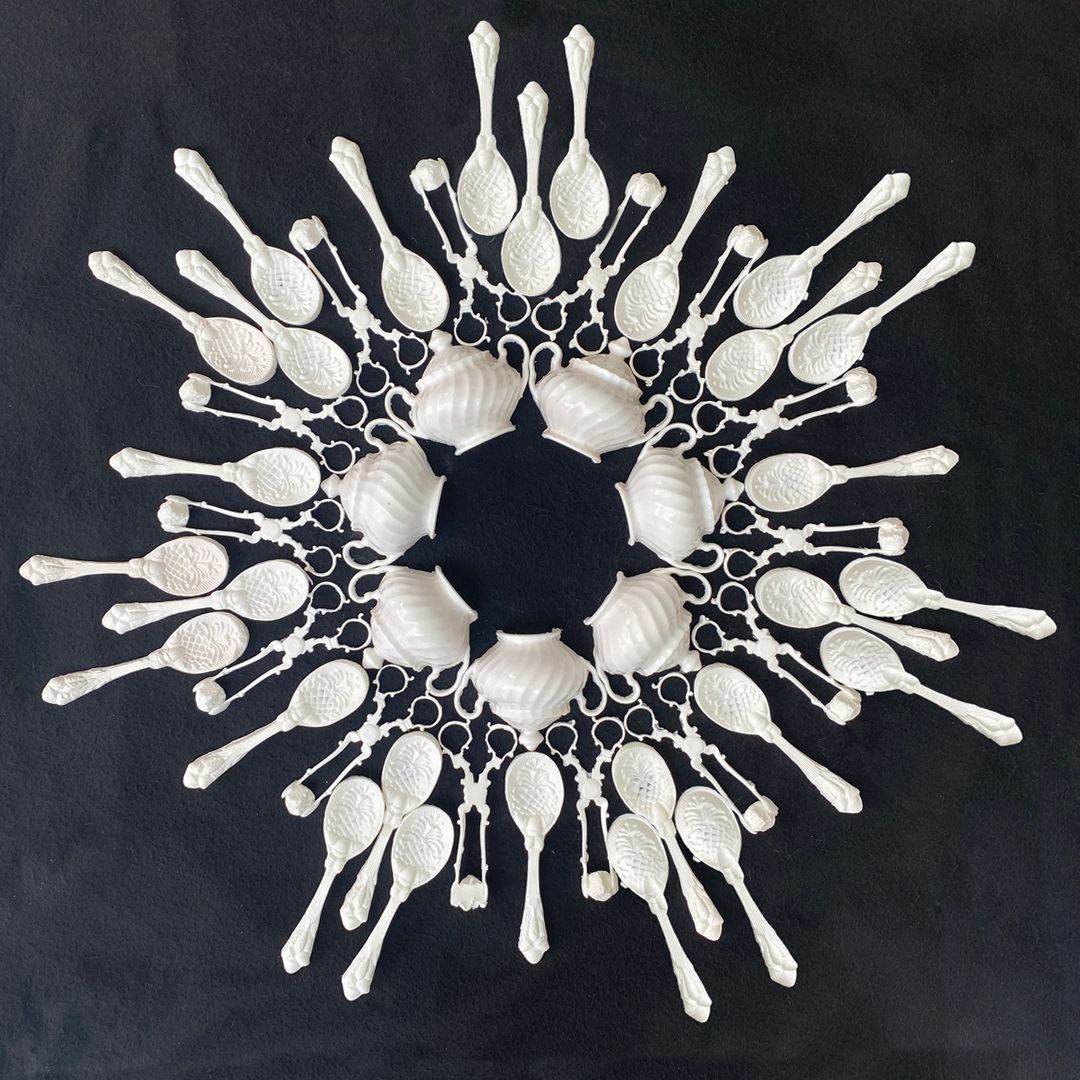
There is no place like home and in Britain, the ritual of making tea is a gesture of comfort, care, and hospitality. The familiar question, "One lump or two?", evokes warmth, companionship, and the simple solace of a hot sweet cup of tea. Using Georgian sugar bowls, sugar tongs and sugar spoons One Lump or Two? examines the hidden histories within this soothing tradition. The sweetness of tea and the sugar industry, was made possible by the exploitation of enslaved people on Caribbean sugar plantations, revealing a horrible irony that the comforts of home can quietly contain the darker legacies of empire.
Black velvet was a derogatory term often used by white male settlers to describe indigenous women. Enslaved people on the plantations were provided clothes of coarse cloth. The plantation owners used fine, European fabrics like silk, linen, and velvet imported through the triangular transatlantic trade, to display their immense wealth.
One Lump or Two ?
Cast sugar implements, mounted on black velvet.90cm h x 90cm w 2026
Queen Anne Ceiling Rose. 2.5 meter diameter.. Cassini plaster.
Exhibited at Fresh Air Scupture June 2026.
Images courtesy of Steve Russel Studios
Queen Anne Ceiling Rose Artist Statement
Ceiling roses have long occupied the domestic interior as symbols of refinement, ornament and permanence. Queen Anne Ceiling Rose destabilises this familiar architectural form, transforming it into a sculptural site through which the histories embedded within Britain's built environment can be reconsidered. Intricate radial patterns draw the viewer through their visual harmony before revealing objects associated with the transatlantic slave trade. Ornament becomes both memorial and witness, exposing the uneasy relationship between beauty, power and violence.
Many buildings throughout Britain remain materially and symbolically connected to the wealth generated by slavery. Central to this history is the South Sea Company, which held the British Asiento contract to supply enslaved Africans to Spanish America. The profits of this trade extended into the British monarchy through the investments of Queen Anne and later George I, becoming embedded within the architecture and cultural institutions that continue to shape Britain's public and domestic landscapes.
Embedded within the relief are recurring symbolic forms. Bones, grenades, aubergine and peach emojis, sugar implements, tobacco jars, clay pipes, eighteenth-century coins, chess pieces and scissors operate as fragments of a wider historical vocabulary. Together they reference the physical and sexual violence of enslavement, the extraction of wealth through the triangular trade, and the systematic denial of agency experienced by enslaved people. During the World Wars, hand grenades were colloquially known as pineapples, while the pineapple had already become an established motif within Georgian and Victorian architectural ornament, symbolising prosperity and hospitality. The work exploits this convergence of meanings, allowing ornament and violence to occupy the same visual language.
Arranged within the geometry of a traditional ceiling rose, these objects refuse the neutrality of decoration. Instead, they reveal architecture as a repository of colonial memory, where aesthetic refinement and economic power remain inseparable. Rather than illustrating history, Queen Anne Ceiling Rose asks how sculpture can expose the ideologies embedded within the built environment, inviting viewers to reconsider the relationship between ornament, memory and the enduring legacy of empire.
Queen Anne Ceiling Rose, Detail. 2026.
Wall mounterd tryptic . 135cm H x 90cm W
Exhibited at Assemlbly, Moving gallery and Abject gallery Sunderalnd, 12th june - 25th July 2026 and RSS Summer Exhibition, 19th Sept - 26th Nov 2026 , Dora Housee, 108 Old Brompton Road, London, SW7 3RA
Cast Georgian sugar implements, human hip joint, whips , pawns, scissors, tobacco jar and Georgian clay pipes, bull whip.
Studio research to see how the objects could fit together. resulted in the development of smaller wall mounted works.
The sugar implements lead to a new work called One Lump or Two?
There is no place like home and in Britain, the ritual of making tea is a gesture of comfort, care, and hospitality. The familiar question, "One lump or two?", evokes warmth, companionship, and the simple solace of a hot sweet cup of tea. Using Georgian sugar bowls, sugar tongs and sugar spoons One Lump or Two? examines the hidden histories within this soothing tradition. The sweetness of tea and the sugar industry, was made possible by the exploitation of enslaved people on Caribbean sugar plantations, revealing a horrible irony that the comforts of home can quietly contain the darker legacies of empire.
Black velvet
was a derogatory term often used by white male settlers to describe indigenous women. Enslaved people on the plantations were provided clothes of coarse cloth. The plantation owners used fine, European fabrics like silk, linen, and velvet imported through the triangular transatlantic trade, to display their immense wealth.
One Lump or Two?
Cast sugar implements, mounted on black velvet.
70cm h x 70cm w 2026