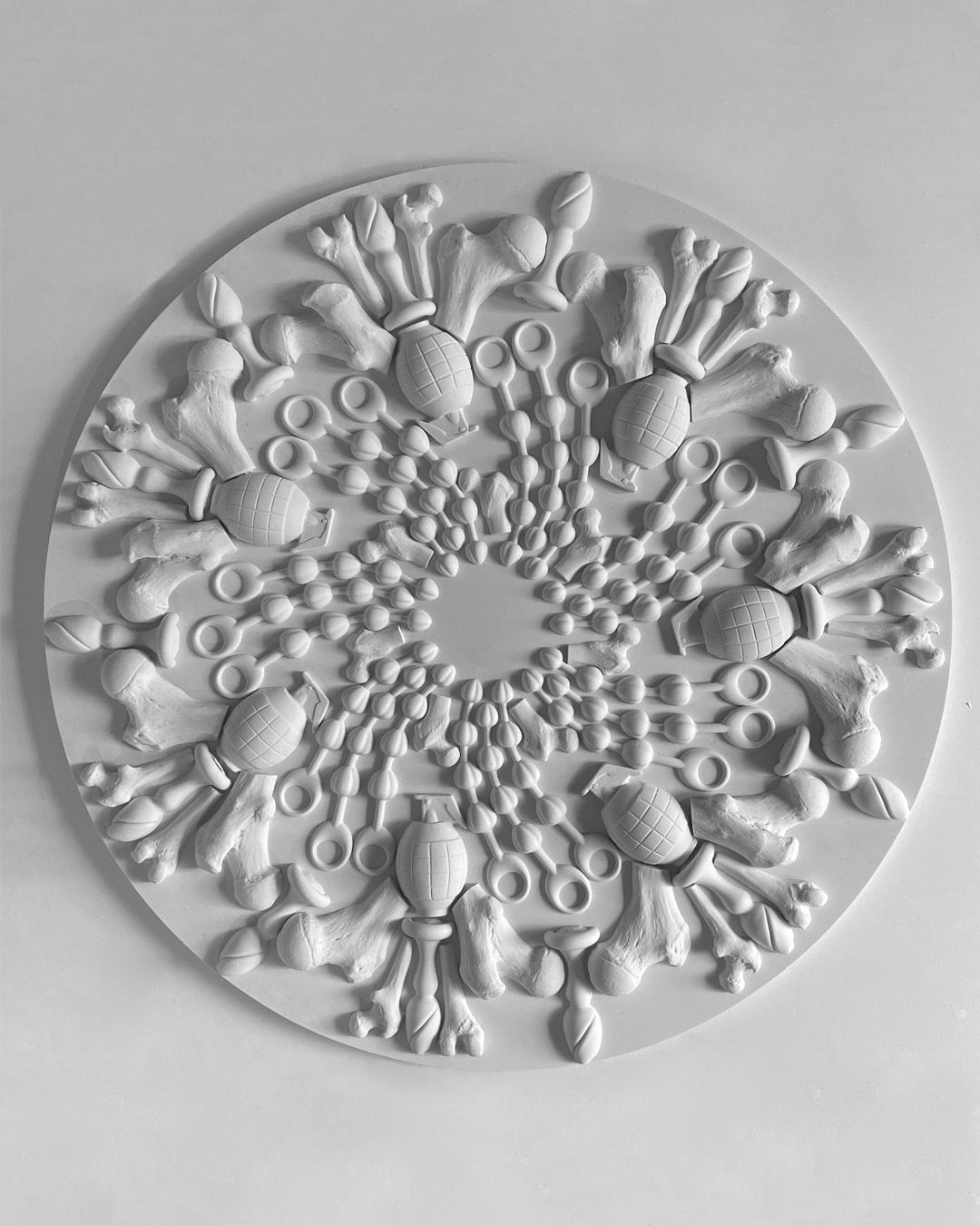
CEILING ROSE 2025

Ceiling Rose 78cm diameter
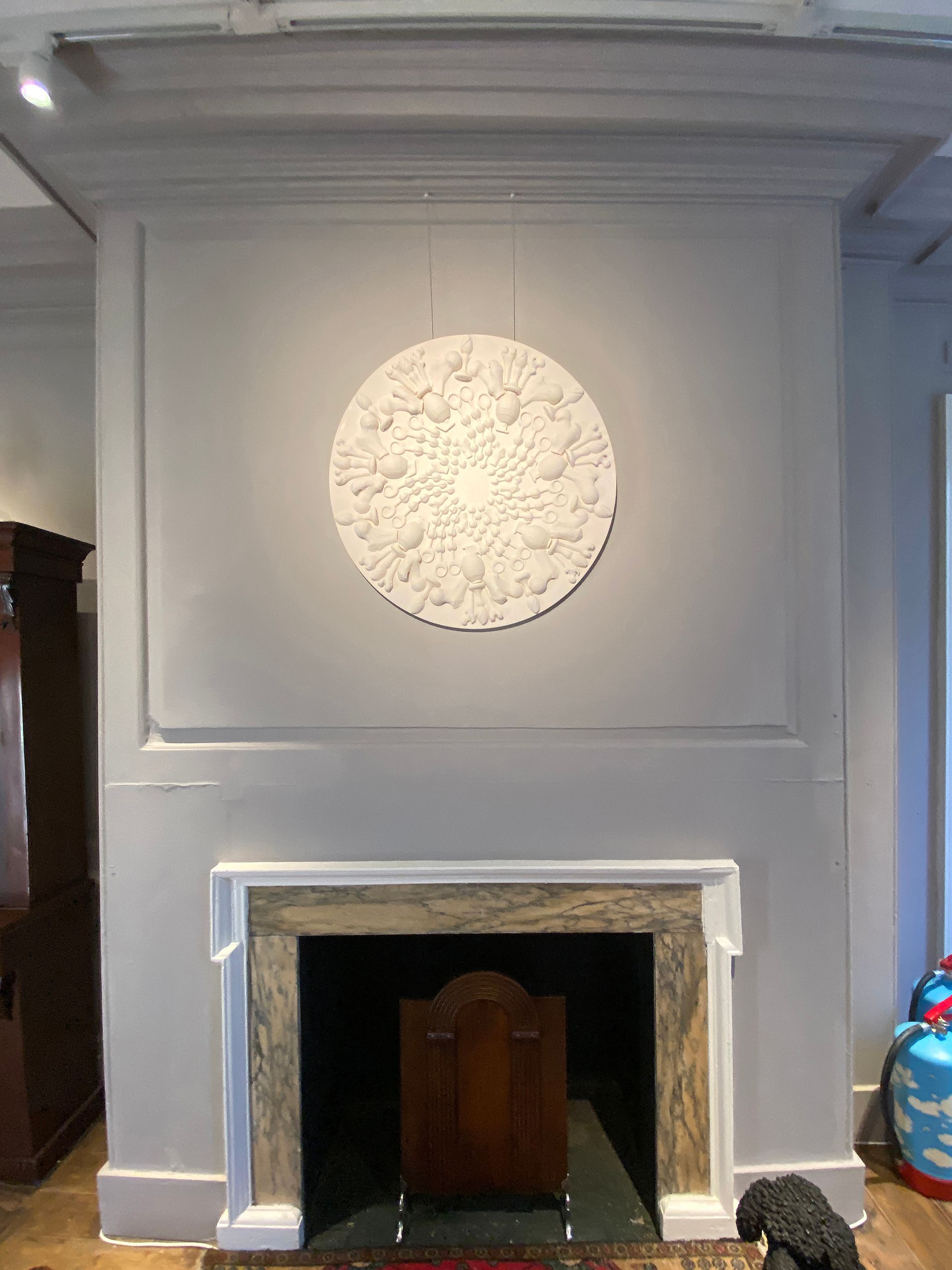

Exhibited at The Royal Society of Sculptors Summer Show,

July16th - Sept 21st 2025, Burgh House, Hampstead

Many buildings in the UK have historical ties to the slave trade, both directly and indirectly. 


Bones, grenades, and sex toys have been used as a symbolic reference to the sexual and physical atrocities suffered by enslaved persons. Grenades representing violence, were nicknamed as pineapples in the world wars and pineapples were popular in ceiling roses, during the Georgian and Victorian eras. They represented wealth, as it was a rare and exotic fruit in Europe at the time. 


There is perhaps an ironic discomfiture of seeing these objects that represent those treated as less than human arranged as an architectural feature of buildings owned by the very same people who have taken away their agency.


BELOW : Work in Progress for 2026.  Large Ceiling Rose as  floor installation. To be exhibitted at Freshair Sculpture June 2026.


Artist Statement and Research.


Many buildings in the UK have historical ties to the slave trade, both directly and indirectly. The South Sea Company traded in the transatlantic slave trade. Queen Anne was allocated a portion of the South Sea Company's stock, and her successor, George I, inherited and expanded his investments. 


Bones, grenades, and the emoji reference of aubergines and peaches have been used as a symbolic reference to the sexual and physical atrocities suffered by enslaved persons. Grenades representing violence, were nicknamed as pineapples in the world wars and pineapples were popular in ceiling roses, during the Georgian and Victorian eras. They represented wealth, as it was a rare and exotic fruit in Europe at the time.


Sugar cane and sugar implements, bowls, tongs, and spoons together with tobacco jars and clay pipes and coins from the 18th century reflect Britain’s involvement in the trade triangle of the transatlantic slave trade. The returning ships carried sugar and tobacco produced by forced labour in the plantations.


Chess pawns are metaphors for lack of agency and the different sizes used combined with scissors reflect family separation, a common and devastating tactic used to control enslaved people.


The objects are arranged with a repeating Fleur-de-lis motif, and at the centre a Queen chess piece comments on British Colonialism.


The Triangular Trade was a deeply cruel and exploitative system that left a legacy of suffering and inequality. There is perhaps an ironic discomfiture of seeing these objects that represent those treated as less than human arranged as an architectural feature of buildings owned by the very same people who have taken away their agency.


Above drawing of ceiling rose. Below, 3 different panels to be molded and cast, one central panel and ten outer panels.